Searching for Animals in the Land Below the Wind
This blog focuses on our safari trip to the northeast corner of Borneo. Borneo is the third largest island in the world, and it is split between three countries: Brunei is one little chunk of Borneo, and the remainder of the island is split between Malaysia and Indonesia. We stayed in Sabah, in Malaysian Borneo. It’s called the land below the wind because it is protected from the worst of the weather systems (they hit the Philippines and Indonesia first). The land of Sabah is mostly either palm oil plantations or protected reserves. In exciting news, tourism has recently started bringing in more money than palm oil, so more investment is starting to go into conserving and rewilding land. Borneo is not a pristine safari experience - there is trash in the rivers and bays, and lots of driving through palm plantations - but it was honestly really uplifting to be somewhere that is working toward protecting its land and animals for future generations.
The animals are why we went to Borneo (I give Jason credit for watching documentaries, remembering there were cool animals there, and saying we that should). Borneo has been an island for a very long time, which means that their animals have been isolated for a long time, and many of them are rare and endemic. It’s the only home of the Bornean pygmy elephant, the proboscis monkey, two of the three remaining subspecies of Orangutan, and tons of other special mammals, amphibians, reptiles, birds, insects, and plants.
We began our safari week by flying to Sandakan, a small city on the coast. We spent the night in a hotel and then were picked up by a driver to begin our 5-day safari.
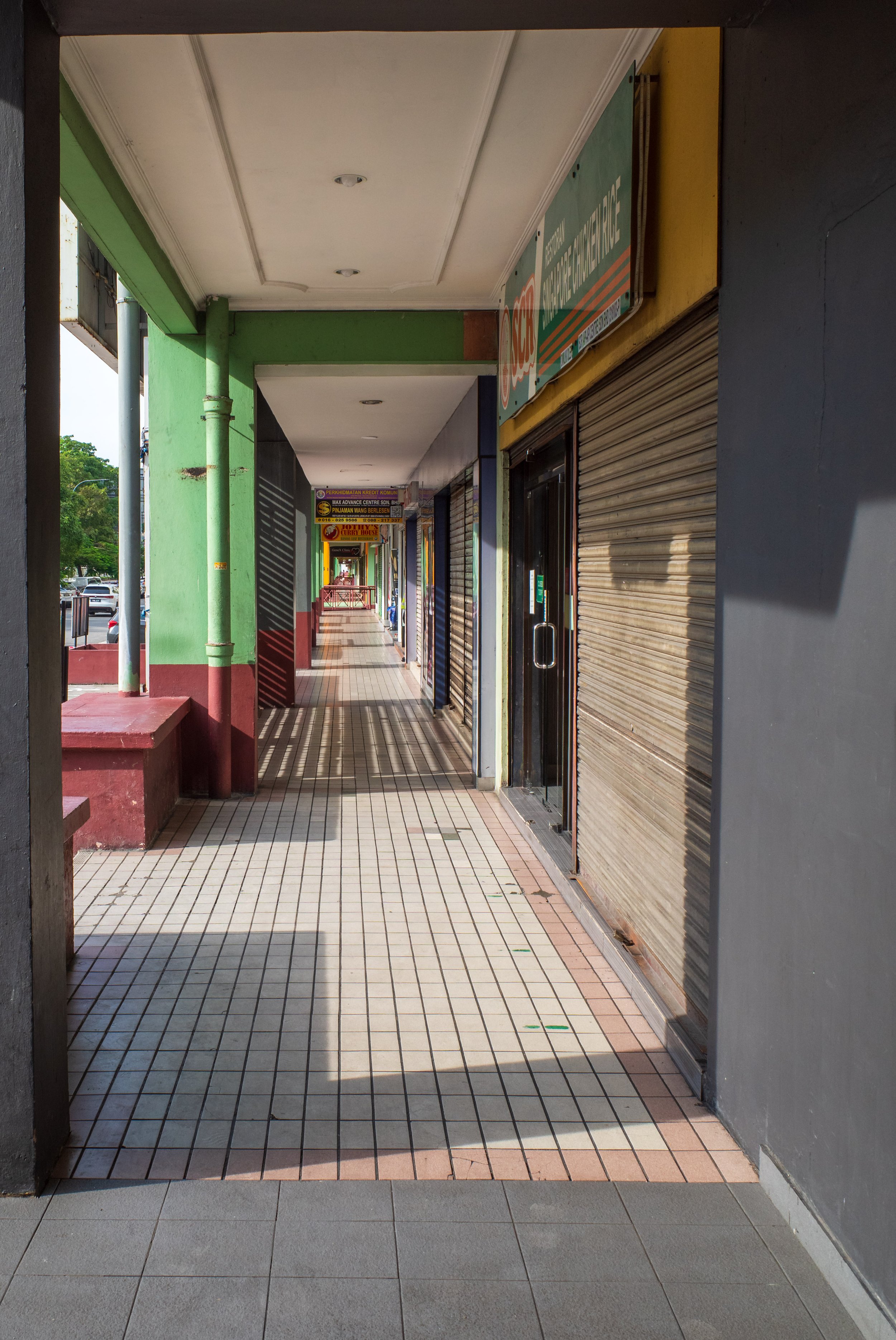
A quiet street in Sandakan (photo/Jason Rafal)
After being picked up, our first stop was the Sepilok Orangutan Rehabilitation Centre, which has been raising and rehabilitating rescued and orphaned orangutans since 1964. It was really cool to be able to see them up close (we didn’t know at the time that we’d be having more up-close encounters with wild orangutans).
A mother entertaining her baby (photo/Jason Rafal)
The baby orangutan swinging around (photo/Jason Rafal)
Holding a fruit (note the giant squirrel being jealous in the background) (photo/Jason Rafal)
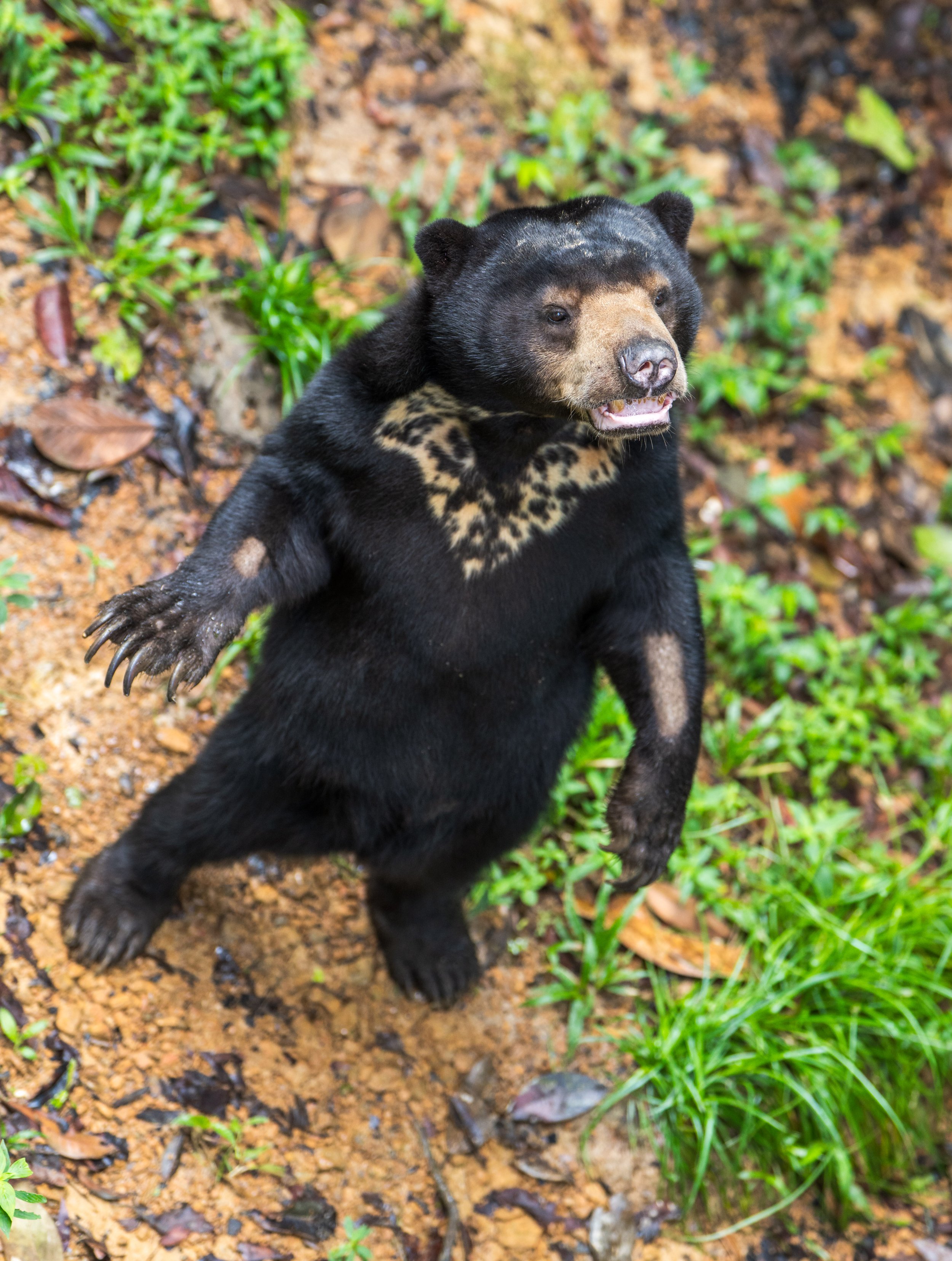
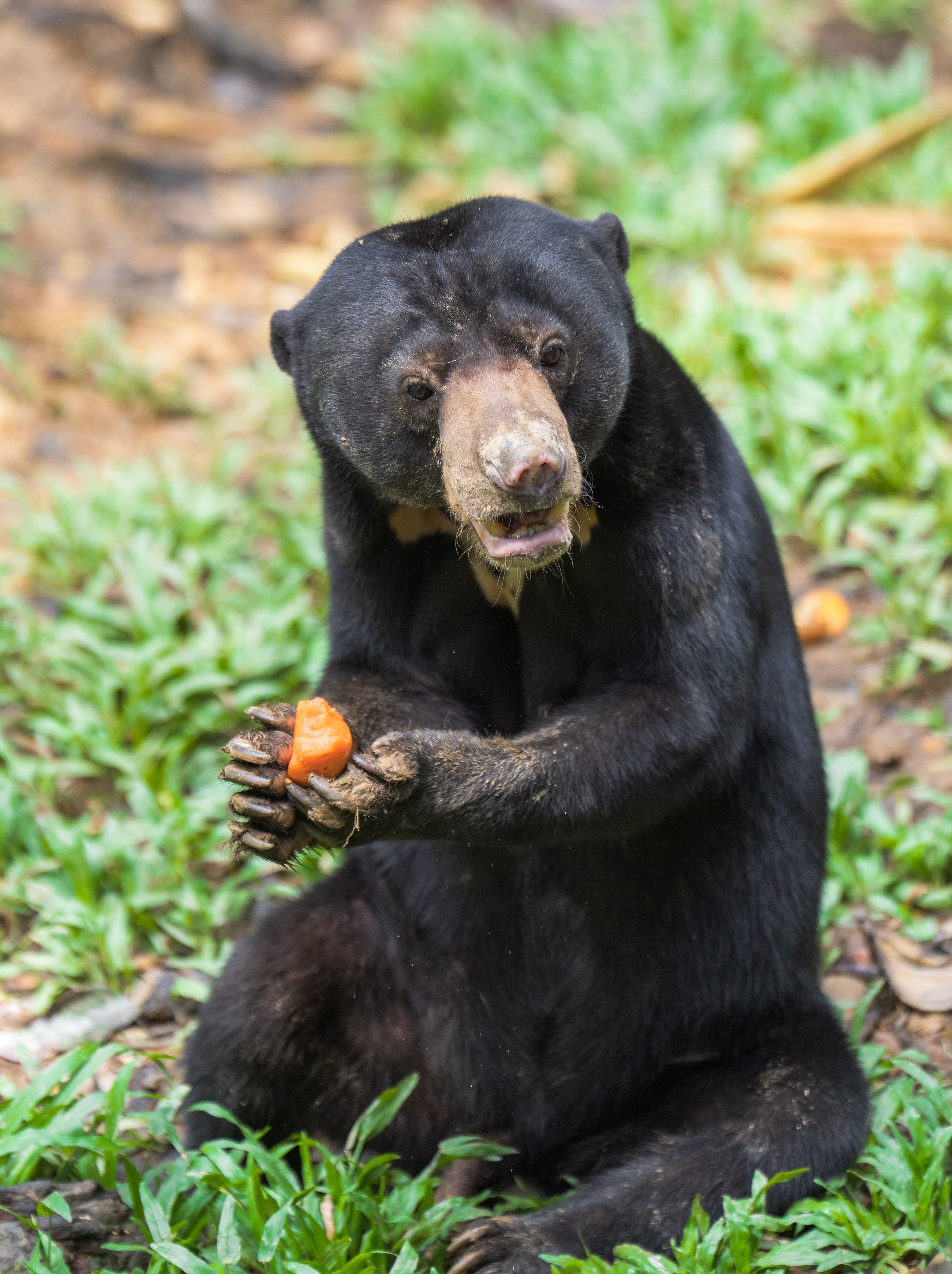
Right next to the orangutan center was one we were even more excited about - the Bornean Sun Bear Conservation Centre. The endemic Borneo sun bears are the world’s smallest bear, and each one has a unique, beautiful cream-colored neck patch. Sun bears are often killed through hunting (their bile, galbladder, and paws are all highly prized) and cubs are also sold as pets on the black market. The conservation center works to rescue, rehabilitate, and release the bears when possible, and is working on limiting habitat destruction as well.
The sun bears are so cute, kind of ridiculous looking, and incredibly fun to watch.
A sun bear lounging on a log (photo/Jason Rafal)
A pit viper in a tree just off the boardwalk trail (photo/Jason Rafal)
After the rehabilitation centers, we drive to a dock to start the 2.5-hour boat ride along the coast and up the Kinabatangan River to the Sukau Rainforest Lodge, where we would spend the next couple of days exploring the large brown river and its endless tributaries into the jungle.
A dump truck being pushed up the river (photo/Jason Rafal)
Heart of Darkness vibes (photo/Jason Rafal)
The restaurant area of our lodge from the water (photo/Jason Rafal)
I was really hoping to see the Borneo pygmy elephants, but had also tried not to get too attached to the idea. The forests are huge, and the elephants are pretty small, and they migrate large distances through completely inaccessible swamps and forest land. They had been seen in the area recently, but even then we weren’t sure we could see them, if they didn’t come out of the trees to the river bank. When we did see them on our first day, I gasped - they are just little elephants (probably about my height). These ones were hanging out in the swampy edge of the water in the trees, just munching on leaves.
A glimpse of a little elephant (photo/Jason Rafal)
They’re so beautiful and cute at the same time (photo/Jason Rafal)
We also saw a ton of other animals along the riverbank, including monkeys and birds.
A pensive long-tailed macaque (photo/Jason Rafal)
A very excited looking baby macaque (photo/Jason Rafal)
This guy had beautiful eyelid markings (photo/Jason Rafal)
Two endemic proboscis monkeys (photo/Jason Rafal)
Our lodge was only accessible by boat, and we were out on the water for both sunrise and sunset.
Blue hour in a safari boat (photo/Jason Rafal)
Sunrise on the river (photo/Jason Rafal)
Early-morning mist (photo/Jason Rafal)
A stock-billed kingfisher diving off a branch (photo/Jason Rafal)
A proboscis monkey looking down at us (photo/Jason Rafal)
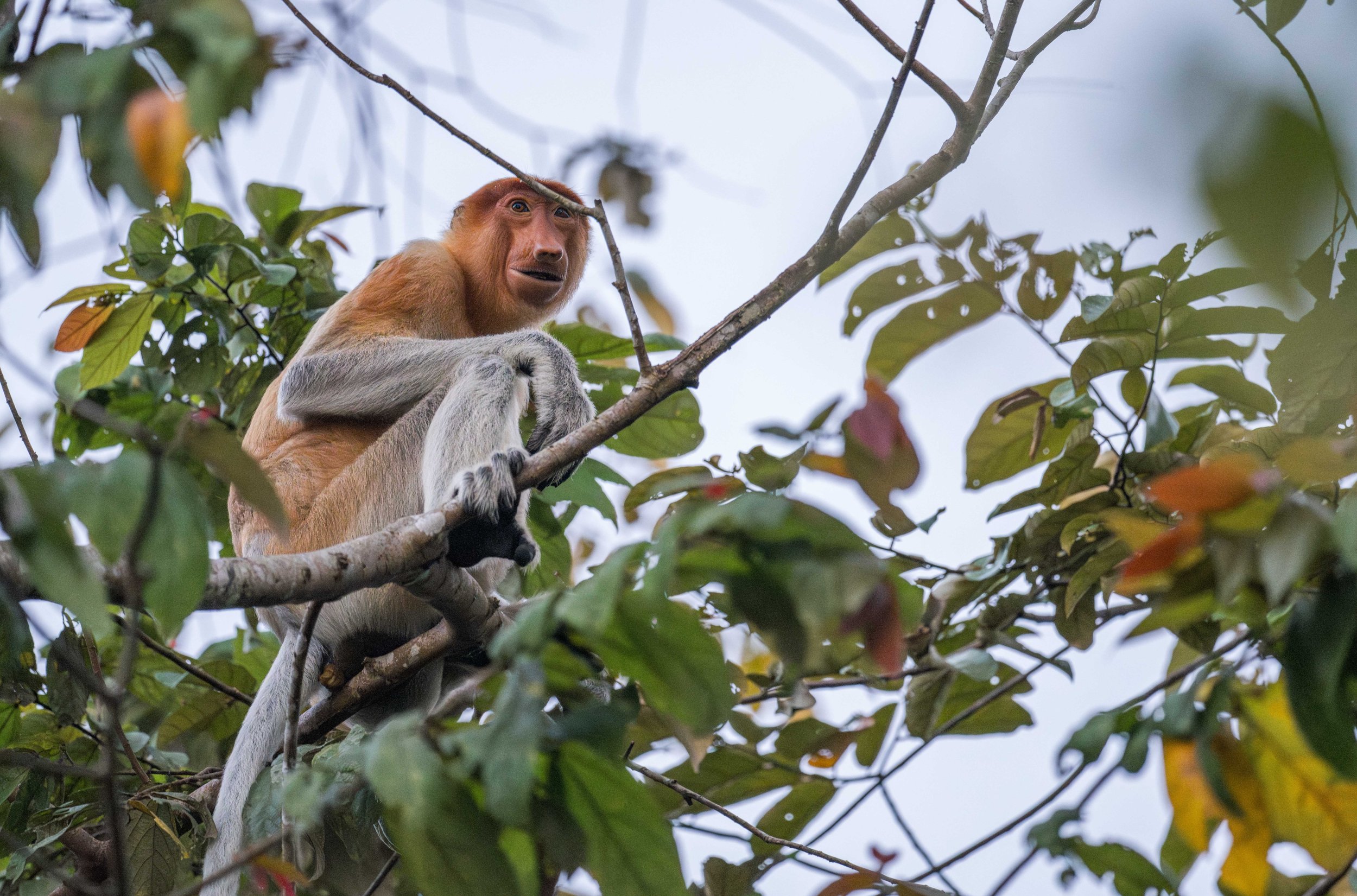
Silly monkey (photo/Jason Rafal)
The Storm’s stork, one of the most endangered storks in the world (photo/Jason Rafal)
A rhinoceros hornbill flying between branches (photo/Jason Rafal)
Some long-tailed macaques hanging out (photo/Jason Rafal)
A tiny blue-eared kingfisher, Jason’s favorite bird of the trip (photo/Jason Rafal)
I think it should be called a white-eared blue kingfisher, but that’s okay (photo/Jason Rafal)
Another stock-billed kingfisher (photo/Jason Rafal)
Close up of the crazy looking rhinoceros hornbill (photo/Jason Rafal)
This weird and dramatic bird is somehow not closely related to a toucan (photo/Jason Rafal)
We saw lots of animals on our boat cruises, but we also saw a lot of animals just hanging out at our lodge. A few orangutans seemed to live nearby, and we saw lots of birds and macaques as well.
The swampy forest yard at our lodge (photo/Jason Rafal)
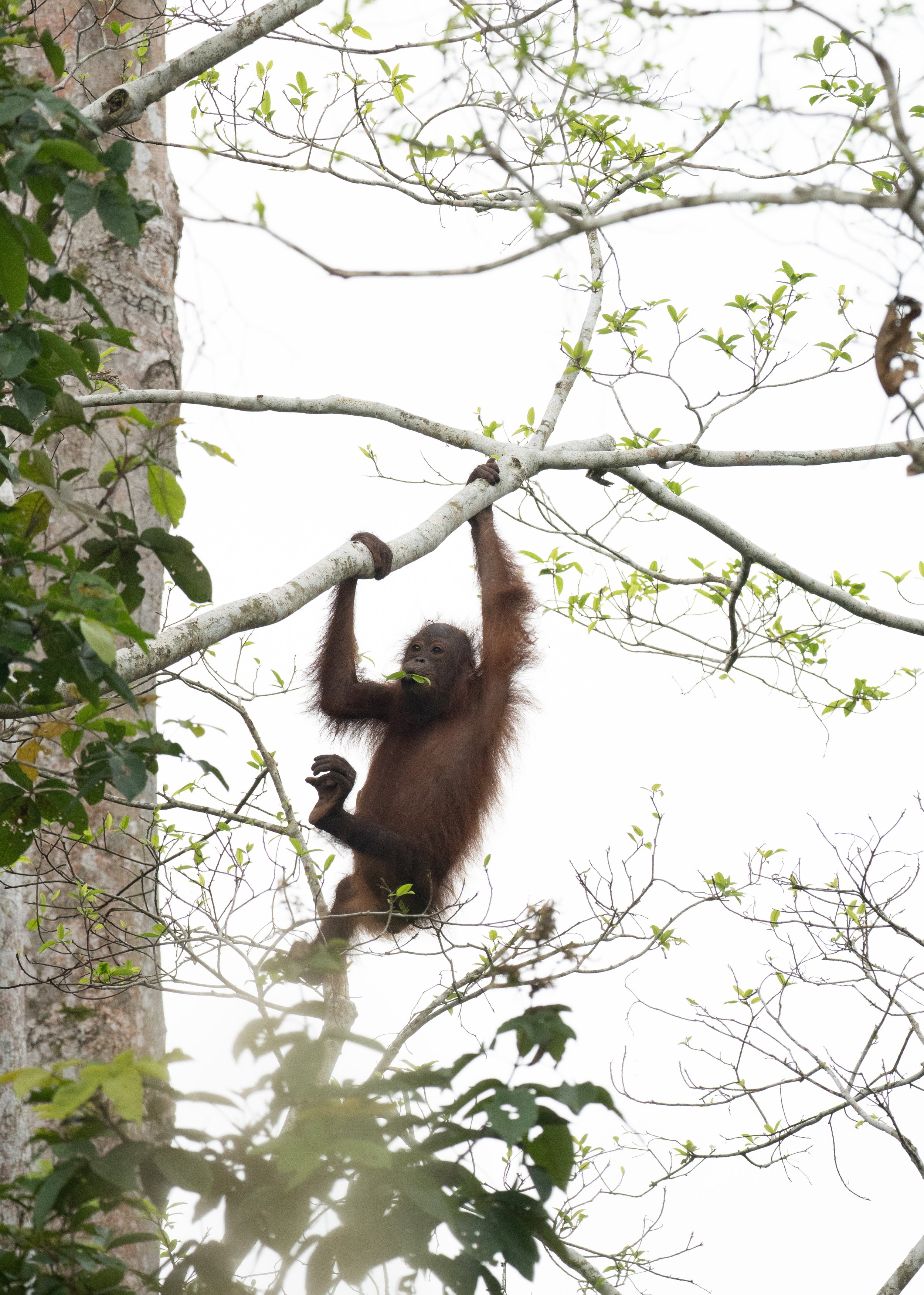
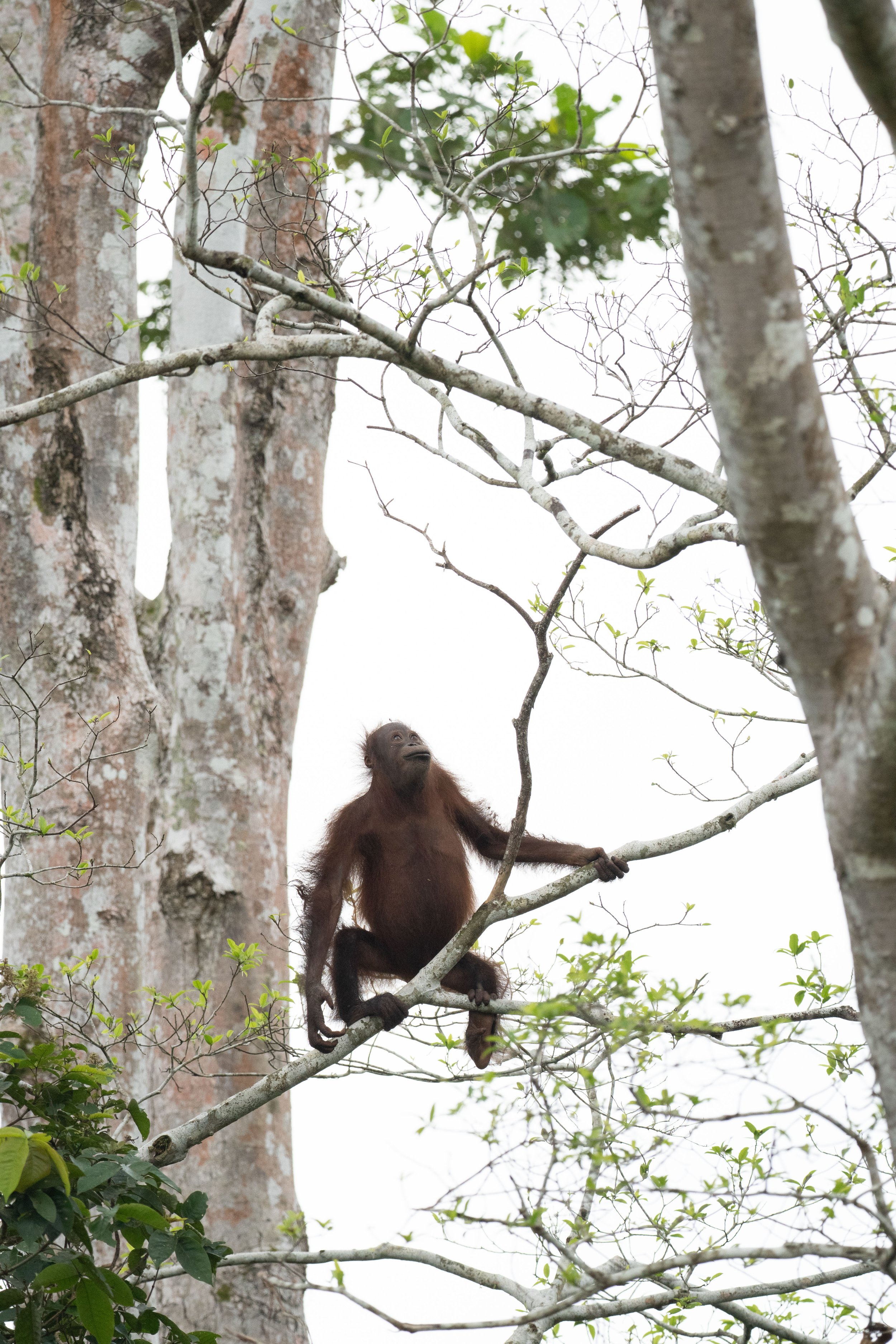
An orangutan testing the weight limits of a tree (photo/Jason Rafal)
An oriental pied hornbill (photo/Jason Rafal)
The always ubiquitous but adorable barn swallow (photo/Jason Rafal)
A young macaque walking down a lodge roof (photo/Jason Rafal)
Smiles from an orangutan in the rain (photo/Jason Rafal)
Their palms are so long! (photo/Jason Rafal)
Our afternoon excursion on our second day of safari was a trip to Gomantong Caves, where we walked around one of the largest collections of bat guano (and cockroaches) in the world. I had been a little nervous for this one; I’m not great with large crawly bugs, and reviews of the cave were not reassuring. After all that worrying, though, it became one of my favorite safari excursions of the trip.
The caves are home to thousands of bats as well as swiftlets, whose nests made of saliva are the key delicacy in bird’s nest soup. People use ladders, ropes, and poles to climb up more than 100 feet to harvest the bird’s nests from the roof of the cave. The nest harvesting is highly regulated, and there are guards in the cave all night to prevent anyone from stealing them.
We started with a easy hike through the jungle to the caves, where we stopped along the way to look at insects, birds, and trees in the forest.
A centipede-type thing (photo/Jason Rafal)
This vine was wrapped around a tree that died, and now it spirals around nothing (photo/Jason Rafal)
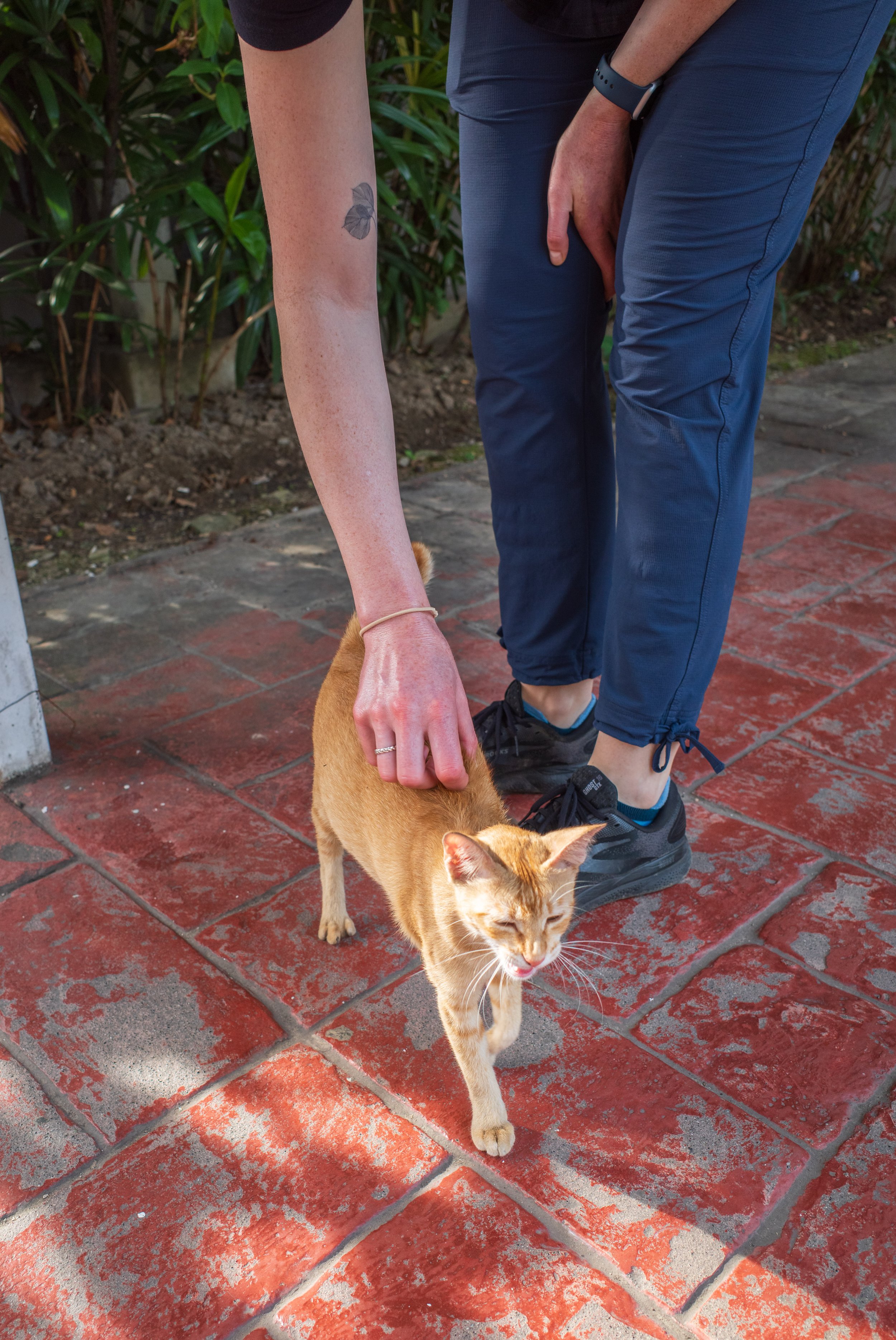
When we got to the mouth of the cave, I distracted myself by making friends with one of the tiny, adorable, half-tailed cats hanging out in the area. We noticed that many of the cats had little stumpy tails, and when we looked it up later, we learned that it’s a genetic difference that’s really common in Borneo - another example of islands creating their own slight variations to different species.
One of the adorable cats I became friends with (photo/Jason Rafal)
The cave was definitely dark and full of cockroaches. Our guide told us that they wouldn’t try to run to our feet since they didn’t want to get stepped on, and he had worn sandals just to prove how unconcerned he was, but I tried not to look too closely at where I was stepping because I didn’t want to know.
The boardwalk was damp and slippery, and we alternated between trying not to fall into the guano and stopping to observe bugs and natural cave features.
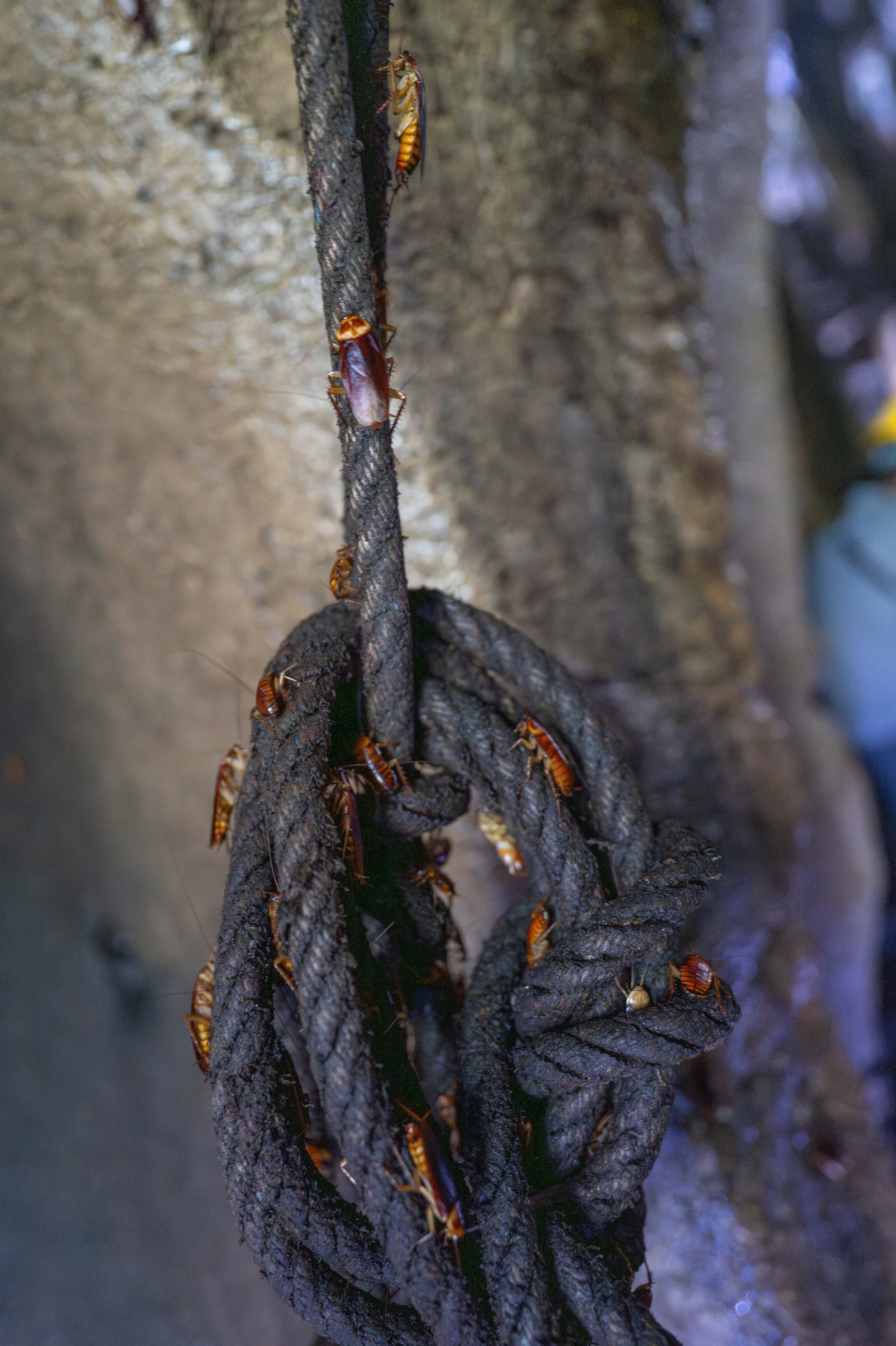
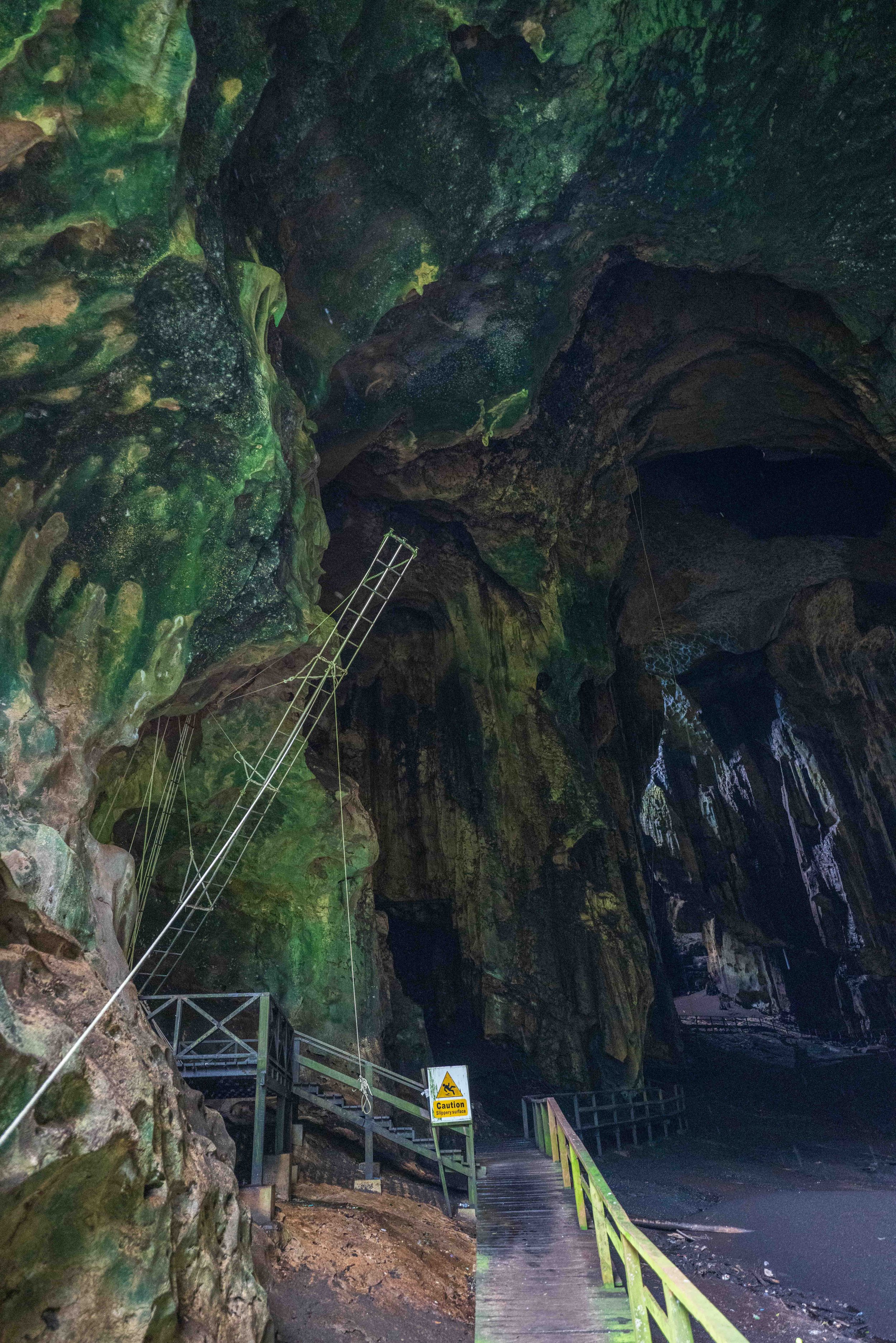
Light pouring into one of the dramatic, creepy, and beautiful Gomantong caves (photo/Jason Rafal)
These apparently eat cockroaches (photo/Jason Rafal)
The shack where guards stay all night to make sure there’s no illegal bird nest harvesting (photo/Jason Rafal)
After walking around in the cave, we climbed 500 steps to a viewpoint above the cave, where we would wait for the sunset bat exodus. On the way, we had our best orangutan encounter of the day - a mother, baby, and third orangutan were all just off of the boardwalk and totally unconcerned with us being there. I also found a cat to bond with.
A very curious and absurdly adorable baby orangutan (photo/Jason Rafal)
I mean…look at its little teeth (photo/Jason Rafal)
Still watching us…mom was unconcerned (photo/Jason Rafal)
A small and acrobatic red leaf monkey (photo/Jason Rafal)
I found another cat to befriend while waiting for the bat exodus (photo/Jason Rafal)
A bird of prey sitting in a tree and waiting for bat dinner (photo/Jason Rafal)
Sunset over the dense tropical rainforest (photo/Jason Rafal)
The bats don’t come out at a specific time each evening; it depends on the weather, their recent behavior, and other mysterious reasons. We waited at the top for over an hour, making bets with the other group who was there about what time the bats would come out.
Finally, just after 6, we saw a bat hawk fly around the mouth of the cave, and then there were bats streaming out. We went down to a lower lookout, where we watched the birds of prey diving into the stream of bats to collect their meal. After watching for a while, we walked down hundreds of stairs in the dusk before driving back to the boat that took us to our lodge, where we were late for dinner but very happy.
A bat hawk flying by the cave (photo/Jason Rafal)
The bat exodus begins. SO MANY BATS. (photo/Jason Rafal)
A bird swooping in to get dinner (photo/Jason Rafal)
More bat hunting (photo/Jason Rafal)
We had no idea hornbills ate meat until we saw them hunting bats (photo/Jason Rafal)
After two nights at the Sukau Rainforest Lodge, we transferred to the newly opened Utan Rainforest Lodge, which was about 5 hours of driving away along very rough palm plantation roads. By the time we got there, we were happy to get out of the car and stretch and take in our new surroundings. Utan feels isolated; it’s in the middle of nowhere, and there were about 10 guests, including us, at the lodge (even fewer when we left). We had amazing personalized attention from the staff, and the food, which we ate on an open-air deck, was wonderful. It was a very different ecolodge experience than the very well-established Sakau lodge, but every interaction and every animal sighting felt a little more special.
Utan is next to a primary mangrove forest, so while we still did a lot sightseeing by boat, the types of trees were different, and there were some new birds to see. On our first evening, we headed out in the boat to explore.
A white-collared kingfisher (photo/Jason Rafal)
A common sandpiper waiting for the tide to recede (photo/Jason Rafal)
When we got to the brackish water near the ocean, we saw over a dozen brahminy kites flying in circles and diving. We went closer and saw that they were fishing, and we watched for a while in the golden hour light as they (very successfully) dove into the water to catch fish and then took them up into the trees to eat.
A brahminy kite soaring over the brackish water (photo/Jason Rafal)
Kites diving down to catch fish (photo/Jason Rafal)
Success! (photo/Jason Rafal)
Fish come to eat trash, birds come to eat fish (photo/Jason Rafal)
After watching the kites fish for dinner, we went up one of the river tributaries and found a 12-foot crocodile swimming around. I’ve never seen one up close in the wild, and they are terrifying. It glided through the water silently, with only its eyes, snout, and dragon-like back spines visible.
An exceptionally large and alarming crocodile (photo/Jason Rafal)
Our guide, Faris, spotted a bird trapped under some trash in the water and went to go see if it was likely to live - the crocodile was going to find it soon. She leaned over the edge of the boat to scoop it up, and we ended up taking it back to the lodge for hopeful rehabilitation.
A bedraggled tern, rescued by our guide (photo/Jason Rafal)
The crocodile looking for the tern (photo/Jason Rafal)
A tiny fishing village (photo/Jason Rafal)
The tern drying on the way back to the lodge (photo/Jason Rafal)
Sunset in the bay (photo/Jason Rafal)
A fiery sky (photo/Jason Rafal)
A safari has a specific and unusual cadence that’s unlike anything I’ve ever done before, so I’m going to try to explain one of my days here, in second person, with photos to help.
You wake up at 5:45 am, even it’s a sleeping-in day and your alarm doesn’t go off until 6:15, and think about the futility of going back to sleep. You get dressed, grab your binoculars, and head to the lobby to grab coffee. Before 7 you’re wearing gum boots and splashing through muddy elephant footprints on your way to a bird hide, where you wait until four gorgeous Bornean Firebirds make an appearance.
A Bornean firebird (photo/Jason Rafal)
You have breakfast at the lodge at 8 and then get into a safari-outfitted Hilux at 9 to drive to the river. You spend a couple of beautiful hours scanning for animals and periodically dozing off in the warm morning air. You don’t see the flying fox you were looking for, but that’s okay, because it’s a beautiful day and you’re so relaxed.
The road from the lodge to the boat dock (photo/Jason Rafal)
Being greeted by the resident dogs at the dock (photo/Jason Rafal)
Out looking for birds and bats (photo/Jason Rafal)
A delicious lunch is served at 11:30, and then you spend some downtime reading and wishing you were a person who is capable of napping.
An amazing lunchtime spread (photo/Jason Rafal)
At 3, it’s back in the gum boots to follow your guide on a long walk through the forest, stopping to note trees, mushrooms, insects, and birds.
A damselfly on a leaf in the forest shade (photo/Jason Rafal)
A greater racket-tailed drongo with a snack (photo/Jason Rafal)
There is some sort of stick bug here eating the new purple leaves of the plant (photo/Jason Rafal)
A very flat mushroom (photo/Jason Rafal)
There’s an hour and a half of downtime before dinner at 7; you stay inside in the AC and watch a show this time. Dinner is an amazing buffet of local dishes, including sauteed ferns.
At 8 pm, you board the safari truck again with two other guests, two guides, a ranger, and three other employees who aren’t doing anything and want to come on the night safari.
A beautiful moonlit night (photo/Jason Rafal)
You start to worry about not seeing anything, but then the ranger finds two buffy fish owls, a nightjar, and a palm civet in quick succession. You’re still feeling that high when the truck gets stuck in the mud, and one of the employees has to run back to the lodge to get a tractor to pull it out. While you’re all waiting, one of the flying foxes that evaded you all day flaps overhead. It’s massive. You stare in wonder before cheering for the truck being pulled out of the mud, and then finishing the drive with a couple more civets and even a moonrat. You return to the lodge late and fall into bed, tired and full of wonder and appreciation that you get to experience this gorgeous area with amazing locals.
A buffy fish-owl (photo/Jason Rafal)
This owl had one messed up eye (photo/Jason Rafal)
Dramatic flight into the night (photo/Jason Rafal)
A Bornean palm civet (photo/Jason Rafal)
A Malayan civet (photo/Jason Rafal)
I didn’t know to be excited for civets, but I loved them (photo/Jason Rafal)
A Bornean moonrat, which is somehow not related to an opossum (photo/Jason Rafal)
A sleeping monitor lizard (photo/Jason Rafal)
On our last morning, we had some time before going to the airport, and our guide very kindly offered to take us back to the bird hides for the morning to see if we could view all three of the endemic birds the lodge is known for.
A shrew-faced ground squirrel posing with some mushrooms (photo/Jason Rafal)
A white-crowned shama (photo/Jason Rafal)
A Southern pig-tailed macaque in a tree above us (photo/Jason Rafal)
The dramatic Bornean crested fireback (one mature and two immature males) (photo/Jason Rafal)
A fireback in motion (photo/Jason Rafal)
A Diard’s trogon guarding its nest (photo/Jason Rafal)
The small and adorable Sabah partridge (photo/Jason Rafal)
Cuties (photo/Jason Rafal)
The striking Bornean Cuckoo (photo/Jason Rafal)
A very large monitor lizard next to our lodge (photo/Jason Rafal)
Such a dinosaur (photo/Jason Rafal)
After lunch, we drove to Lahad Datu and flew to Kota Kinabalu for the night. It was hard to go back to civilization, but we were excited to head to Singapore the next day to meet up with Bella (see previous blog for details on that section of the trip).
A street in Kota Kinabalu (photo/Jason Rafal)
Borneo was a different safari experience than South Africa, but we loved it. It was really interesting to see the ecolodges starting to expand and see tourism gaining more power on the island. There’s still a long way to go to protect the delicate habitats of the amazing resident animals, but it was a really hopeful experience. We’d love to go back someday.
Thank you for being here for another elevator selfie (photo/Jason Rafal)