Between Two Plates: Adventures in Iceland

We had flown through the Iceland airport on two separate trips in the past, but this was our first time actually leaving the airport and exploring. When we were invited to a destination wedding in the western part of the island, we chose to add on a few days to explore the southern coast and the Snæfellsnes peninsula. 

We spent our first couple of days hanging out in and around Reykjavik. I really like the city—it’s cute, colorful, and has a lot of pretty parks and coastline. We also, for the third trip in a row, found ourselves among the beautiful fall colors. I had expected to not see many trees in Iceland in general, but many of the towns and cities have a lot of deciduous trees that change color.

Looking up a colorful Reykjavík street at Hallgrimskirkja (photo/Jason Rafal)

Another cathedral in the city (photo/Jason Rafal)

One of the many murals (photo/Jason Rafal)

Our hotel had a view of the harbor and the concert hall, which is a beautiful building of intricate glass sections. It’s also lovely from the lobby, where we could look up at the reflective honeycombs.

Boats at the port next to our hotel (photo/Jason Rafal)

Inside the Harpa Concert Hall (photo/Jason Rafal)

It was interesting to compare Reykjavik to the other far northern and southern towns we’ve been to, Punta Arenas and Longyearbyen. They’ve all been different, but I also kept remarking at how similar these places at the top and the bottom of the world felt, with their extreme weather, largely barren hills, and colorful buildings interspersed with more modern architecture.

The Sun Voyager sculpture along the water (photo/Jason Rafal)

The sunshine was amazing whenever it made an appearance (photo/Jason Rafal)

Another wonderful mural (photo/Jason Rafal)

A pilot boat in the harbor (photo/Jason Rafal)

On our first full day in Reykjavik, we went to the Penis Museum. I wasn’t sure what to expect, but the variety of things in the museum was impressive. There was art, from painting and drawing to sculpture. There was also an entire room of animal heads and the corresponding penises for that species, which was weird and interesting. Overall it was a good rainy morning activity.

A corner of the penis museum (photo/Jason Rafal)

Sunday afternoon, we went to Sky Lagoon. I had been on the fence because it’s expensive, and I have been to several beautiful hot springs, but it was surreal and beautiful in a different way. The lagoon is surrounded by black lava rocks, green moss, and the ocean. The seven-step spa ritual, which is included in the tickets, was also really nice; staring out across the ocean from within a sauna is an amazing feeling. There’s also a wade-up bar, which is very smart, because everyone wants a pretty drink while they’re sitting in the water.

Enjoying the beautiful Sky Lagoon (photo/Jason Rafal)

On our way back to Reykjavik, we stopped at an open space area to do a light hike. It was almost empty, aside from a couple of locals who gave us curious looks, and it was a quiet and peaceful way to end our afternoon.

Views from our moody, mossy trail (photo/Jason Rafal)

On Monday we headed out of Reykjavik and to the Golden Circle, a loop of classic Icelandic sights. We started the day by heading to Þingvellir (anglicised as Thingvellir) National Park, where the North American and Eurasian tectonic plates diverge. It’s a UNESCO World Heritage site, and it’s really amazing to be able to walk between the dramatic ridges. It’s also where Iceland’s parliament was founded and continued to meet for hundreds of years (I love the inherent drama of this choice in location). It was full of tourists, and I did slip off of a catwalk, but it was still one of the highlights of the trip. I’d love to spend some more time exploring the other areas of the national park.

Fall views and two tectonic plates (photo/Jason Rafal)

The dominant colors of our trip were yellow-green and shades of gray (photo/Jason Rafal)

Our first waterfall of the trip, Öxarárfoss (photo/Jason Rafal)

Happy towering travelers (photo/Jason Rafal)

The view from Hrafnagjá, a viewpoint on the other side of the park (photo/Jason Rafal)

Our next stop was a last-minute add on, but I’m so glad we went because it was one of my favorite waterfalls of the trip. Brúarfoss has an electric blue water that contrasts with the black rocks and yellow-green moss.

The beautiful color of Brúarfoss (photo/Jason Rafal)

Spoiled by sunshine (photo/Jason Rafal)

Our next stop was Geysir, where the titular geyser is dormant, but we did get to see a smaller geyser go off, as well as lots of steaming, bubbling pools. My favorite part was watching the pool writhe and move before the water and steam shot into the air.

The amazing blue of one of the pools (photo/Jason Rafal)

Looking down at Strokkur Geyser (photo/Jason Rafal)

The constantly bubbling Blesi (photo/Jason Rafal)

The weather, which had been fairly mild in the morning, was starting to get worse at this point. We kept our rain gear on between stops and tried to time our car exits well (though there’s only so much you can do at that point). Our trip to Patagonia earlier this year definitely helped us embrace the proverb that there is no bad weather, only bad clothing, and we definitely used that mentality in Iceland.

The third big stop was Gullfoss, where we stalled and went into the gift shop for a while before going out to see the waterfall because the driving rain had turned into hail, and then very wet snow. We kept an eye on the weather and managed to time our departure from the gift shop perfectly - there was still light rain, but the sun was starting to peak out from the fast-moving clouds, creating constant rainbows. 

Gullfoss is massive. It’s not my favorite waterfall that we saw, but its sheer size is impressive and worth seeing. The walkway is also incredibly scenic, with slightly changing views of the waterfall as you approach.

Double rainbow over Gullfoss (photo/Jason Rafal)

After Gulfoss, we headed back down the road a little and stopped at an Icelandic horse farm where tourists can buy hay pellets to feed the ponies. There were three standing along the fence, waiting, and we gave them some treats and then some neck scratches. With their shaggy coats and thick manes, they’re very adorable.

Making friends with one of the Icelandic ponies (photo/Jason Rafal)

Tongue out from another of the ponies (photo/Jason Rafal)

I would take this pony home (photo/Jason Rafal)

We settled in for a longer drive toward our next hotel, which was almost to Vik. When we were getting close, we made a last-minute stop at Seljalandsfoss because the light was pretty. Seljalandsfoss has three waterfalls along a path, which lets people spread out a little. Again, we were treated to beautiful diffuse light and rainbows.

Typical tourist photo at Seljalandsfoss (photo/Jason Rafal)

More beautiful rainbows (photo/Jason Rafal)

Our hotel for the next two nights was walking distance to a black sand beach, and had a beautiful view toward the ocean in one direction and snow-dusted mountains in the other. The next morning, we headed out to the beach through the rain and wind on an incredibly waterlogged trail. The entire landscape was pretty surreal, with sharp contrast between the black sand, small yellow and green vegetation, and the crashing ocean waves.

Behind the scenes in the rain and wind (photo/Jason Rafal)

Dramatic light at a black sand beach (photo/Jason Rafal)

We made a stop at the giant Skógafoss, which was close to our hotel, and watched the seagulls flying through the waterfall mist.

The fuzzy yellow-green cliffs surrounding Skógafoss (photo/Jason Rafal)

Since we had seen so many waterfalls the previous day, we opted to focus on some other sights for the rest of the day. We went to Reynisfjara beach, which was full of people but really beautiful.

There were many signs warning us about the sneaker waves (photo/Jason Rafal)

People and rocks on the beach (photo/Nicole Harrison)

Seagulls flying above the rocks (photo/Jason Rafal)

A rare photo of the two of us on the rocks at Reynisfjara beach

Next we drove up a dirt road to the Katla Geopark, where we saw almost no one and finally got a taste of the vast emptiness that I had been hoping for.

Standing on a crazy rock in the middle of nowhere (photo/Jason Rafal)

Surreal views and another little waterfall (photo/Jason Rafal)

The patterns made by streams and rivers in Iceland were mesmerizing (photo/Jason Rafal)

Looking down the valley (photo/Jason Rafal)

We drove through a herd of very curious cows (photo/Jason Rafal)

Amazing light on the way to dinner (photo/Jason Rafal)

More sunset views from our hotel (photo/Jason Rafal)

Icelandic horses and a couple of adorable foals (photo/Jason Rafal)

Horses under the full moon (photo/Jason Rafal)

On Wednesday we headed to our next home for the night, near Kirkjubæjarklaustur, a place that I cannot even pretend to be able to pronounce. In Vik, we stopped at Skool Beans, my favorite coffee shop of the trip. It’s in an old American school bus, the coffee is excellent, and much of the merch is branded with Sir Jeff, the owner’s three-legged cat. 

Our next stop was Dverghamrar, the dwarf rocks that are said to have spirits living among them. The hexagonal pillars are pretty crazy looking, and I wouldn’t be surprised to find something unexpected.

A hexagonal pillar (photo/Jason Rafal)

Sitting among the rocks (photo/Jason Rafal)

A rainbow in the waterfall across the road (photo/Jason Rafal)

Stjórnarfoss, which is apparently a great swimming spot during the summer months (photo/Jason Rafal)

Our cabin for the night was near Fjaðrárgljúfur, another place I can’t even try to pronounce. It’s a really beautiful canyon, and there is a walk up with several overlooks.

More amazing shades of yellow-green (photo/Jason Rafal)

The waterfalls at Fjaðrárgljúfur (photo/Jason Rafal)

After taking some photos, we drove further up the road to another stunning, and completely deserted, waterfall, where we watched the weather roll over the hills around us. It was beautiful, and despite the periodic wind and rain, completely peaceful.

It’s hard to tell scale, but this cascade was huge (photo/Jason Rafal)

I know, it’s all beautiful light and moss and water, yet again (photo/Jason Rafal)

Sunrise from our cabin (photo/Jason Rafal)

Thursday was our big day of driving west, but we made a couple of stops on the way. We went to Dyrholaey viewpoint, where we looked out over the ocean beating against the dark cliffs, and then learned about volcanic eruptions at the LAVA Center. We ended our day greeted by a very friendly dog at our Airbnb.
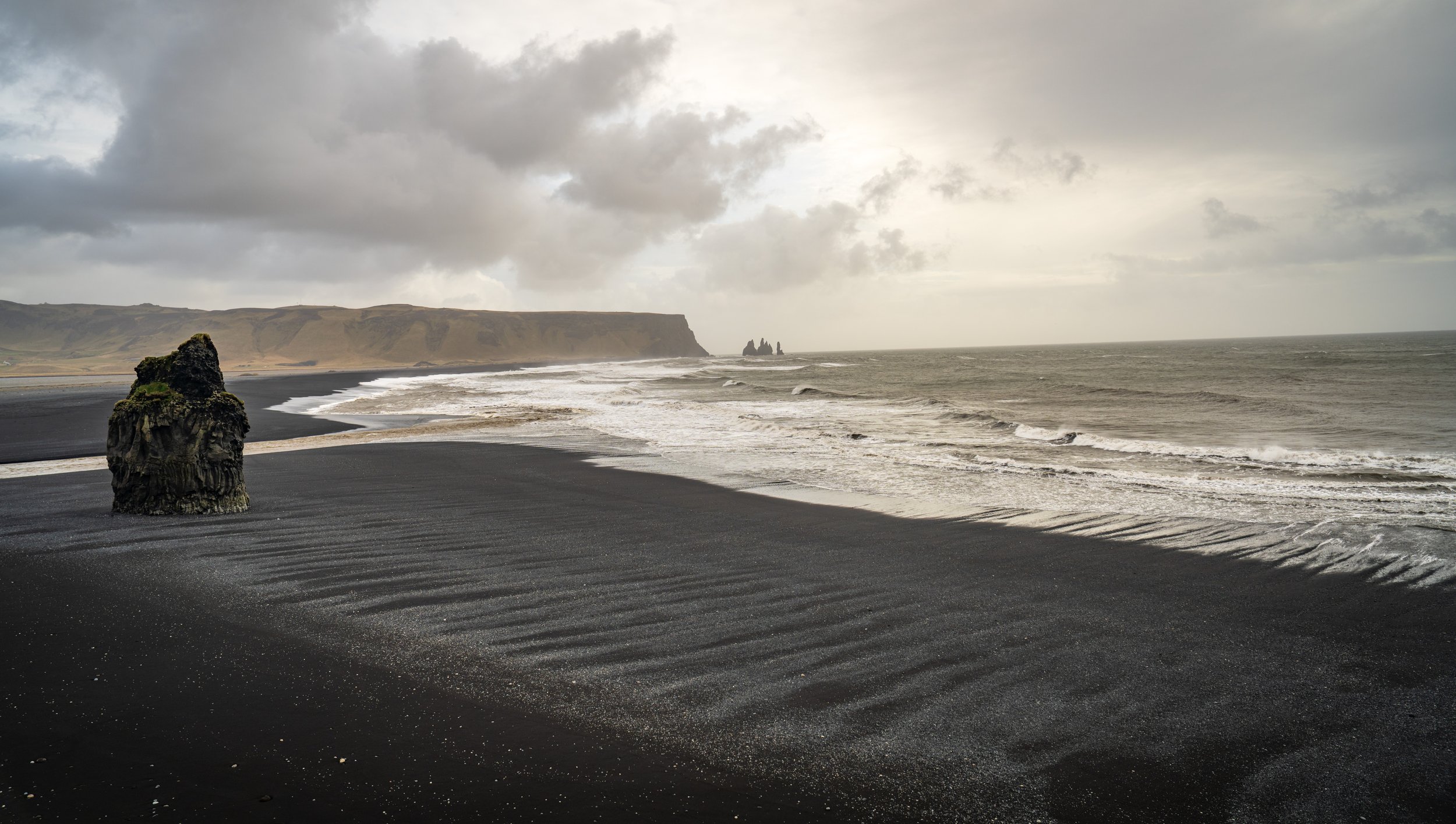
Another amazing black sand beach at Dyrholaey viewpoint (photo/Jason Rafal)

A very friendly dog greeted us at our Airbnb (photo/Jason Rafal)

The view from our house (photo/Jason Rafal)

A little chapel on the property (photo/Jason Rafal)

On Friday, we drove around the Snæfellsnes peninsula before heading to the wedding venue to check in. After stopping at Valaria Coffee, another excellent small roastery recommended by folks at Skool Beans, we drove to the Saxhóll Crater and climbed to the rim. The trail infrastructure was very impressive, as it had been at many of the popular attractions.

Looking out from the crater (photo/Jason Rafal)

Looking down the stairs descending the crater (photo/Jason Rafal)

We also stopped at Dritvik Djúpalónssandur to wander around on the beach. I really loved this beach; there were giant craggly rocks and a lagoon in addition to the black sand and dramatic cliffs.

The rocks along the trail to the beach at Dritvik Djúpalónssandur (photo/Jason Rafal)

Pieces of a shipwreck on the beach (photo/Jason Rafal)

Moody waves (photo/Jason Rafal)

Our last stop before the venue was Rauðfeldsgjá Gorge, where it’s possible to climb up a canyon through a stream. It’s challenging to take pictures of, but very beautiful.

Climbing up the stream (and getting very wet) (photo/Jason Rafal)

Saturday’s pre-wedding adventure was to Selvallafoss, another beautiful waterfall, and then to the Súgandisey Island Light Beacon. We spent the afternoon and evening eating, dancing, and celebrating with old and new friends.

Selvallafoss (photo/Jason Rafal)

More views (photo/Jason Rafal)

Reflections across the lake Selvallavatn (photo/Jason Rafal)

A mossy green mountain (photo/Jason Rafal)

The Súgandisey Island Light Beacon (photo/Jason Rafal)

Steps leading along the island (photo/Jason Rafal)
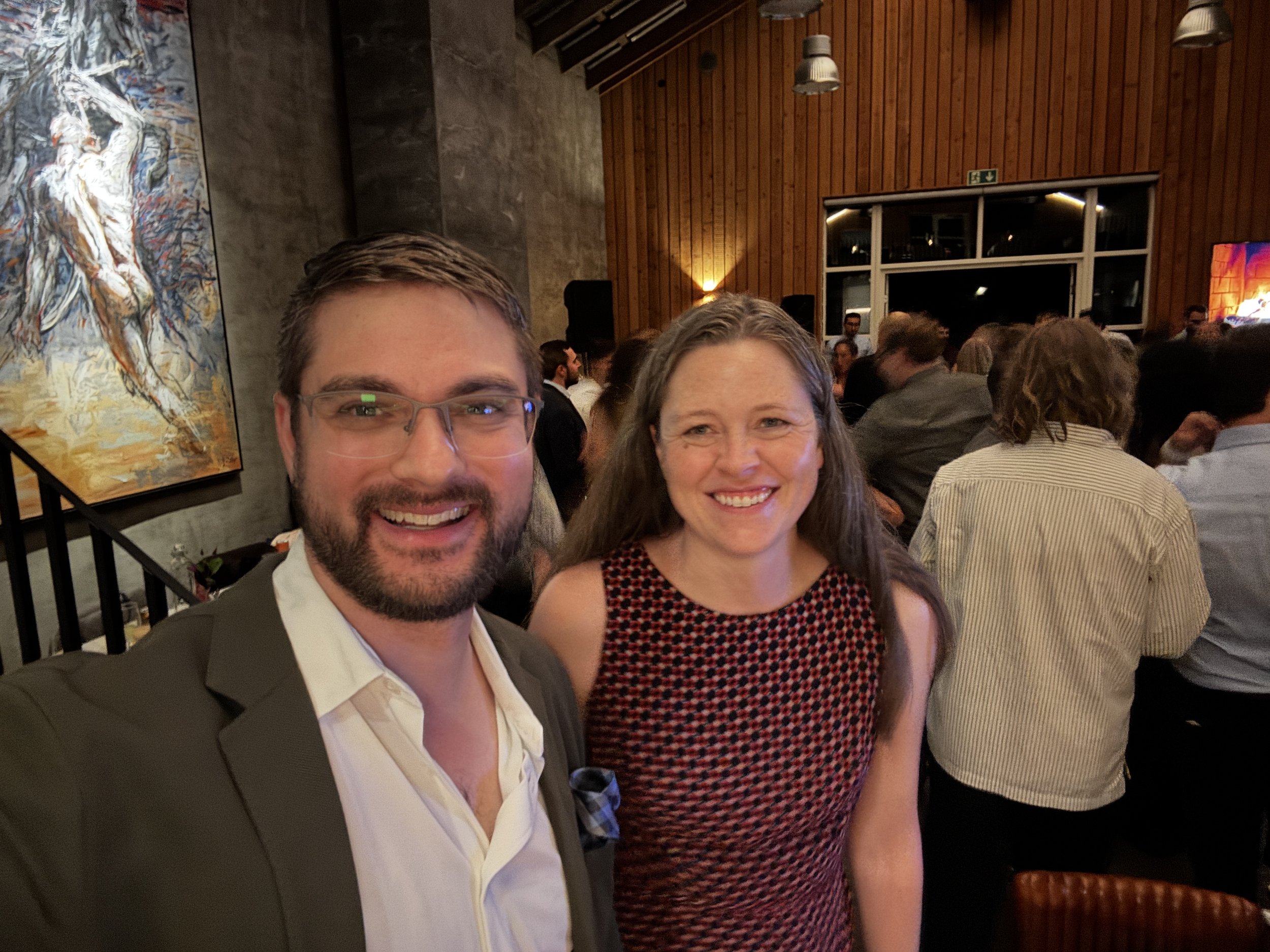
Slightly blurry wedding photo (photo/Jason Rafal)

A photogenic Icelandic sheep at the wedding venue (photo/Jason Rafal)

One of this year’s lambs (photo/Jason Rafal)

Sunday was our last day in Iceland. After the wedding brunch, we began the drive back to Reykjavik, stopping at Hvammsvik Hot Springs for a pre-flight soak in the pools. This hot springs had a few different pools, including a tidal pool that was cooler and filled with seaweed, and it was a lovely way to end the trip. We sat in the water and watched the common eiders and Eurasian oystercatchers eating in the bay.

Eurasian oystercatchers on the beach (photo/Jason Rafal)

I had been excited to go to Iceland for a long time, and it was spectacular in both expected and unexpected ways. There’s the incredibly varied beauty, from the waterfalls, to the beaches and cliffs, to the fields of grass and moss-covered lava rock. A 10 minute drive can be the difference between being in a crowd of 100 tourists and being completely, utterly alone for an hour. The extreme weather, while sometimes harsh and inconvenient, leads to spectacular moments of beautiful light and a true appreciation for 90 seconds of sun. It’s an amazing mental reset, and we look forward to going back and exploring more of the island.

Patagonia, Part 3: Argentina

From Torres del Paine, we had an early morning ride to the border with Argentina, where we crossed and got on a bus to El Calafate. The bus full of people was a little claustrophobic after the vast wilderness of the park, but the views continued to be lovely. Once we got to El Calafate, we checked into our house for the night, did some much-needed stretching, and walked around town. 

A very Argentinian statue: a guanaco drinking maté (photo/Jason Rafal)

El Calafate had lots of stray dogs, including this one who seemed universally beloved (photo/Jason Rafal)

When you have a one-night stop in the middle of an active trip to do laundry and repack (photo/Jason Rafal)

In the morning, we picked up a rental car and drove to El Chalten, a smaller town right at the foot of the mountains. The drive, which was a couple of hours, had beautiful views of two large lakes and dramatic mountains in the distance. Once we got to El Chalten, we settled into our home base and got some food in town.

Rest stop views (photo/Jason Rafal)

Nicole loves mountains but doesn’t know what to do with her arms (photo/Jason Rafal)

El Chalten, due to its location directly at the base of the mountains, is a paradise for climbers and hikers. Most of the popular hikes are accessible walking from town, which was novel and really nice. Sometimes we took the car somewhere if we were tired, but it really wasn’t necessary once we got to the house we were staying at.

On our first full day in El Chalten, we rallied our tired bodies to hike Laguna de Los Tres, the glacial lake at the foot of Mt. Fitzroy. It was a grueling day of more than 15 miles and 3500 feet of elevation gain, but the weather continued to smile down at us, and the views were amazing. In addition, as we climbed we found more and more beautiful fall foliage, which carpeted the mountainsides in red and orange. 

Ally looking like an outdoor clothing ad (photo/Jason Rafal)

Fall colors and beautiful light on the hike up (photo/Jason Rafal)

Glimpses of glaciers (photo/Jason Rafal)

We finally see the top of Mt. Fiztroy (photo/Jason Rafal)

On our hike down, we went to Laguna Capri to rest on the rocky beach for a few minutes and look at the incredible views in the afternoon light. 

We were fascinated by these rotting signs asking us to stay on the trail (photo/Jason Rafal)

Relaxing vibes on the shore of Laguna Capri (photo/Jason Rafal)

More amazing Patagonian forests (photo/Jason Rafal)

So many beautiful colors (photo/Jason Rafal)

The next day, we visited a waterfall and then Jason stayed behind to rest while Emilie, Ally, and Nicole took a smaller hike to Mirador del Torre. The views were a little more cloud-covered, but they were still beautiful. 

A beautiful and very accessible waterfall (photo/Jason Rafal)

Fall colors at the mirador (photo/Nicole Harrison)

Sunset from our house in El Chalten (photo/Jason Rafal)

From El Chalten, we made our way back to El Calafate for a few hours and then flew out to Buenos Aires to end our trip.  

A very odd full-sized model in a park in El Calafate (photo/Jason Rafal)

It was Ally’s first time in Buenos Aires, and the rest of us were excited to return to the city. Jason and Nicole were here in 2018 (you can see those blogs here and here) and Emilie spent a few weeks in the city after college. Buenos Aires continues to be charming; it has beautiful buildings, lovely parks, and amazing food.

Looking down from the apartment where we stayed in Buenos Aires (photo/Jason Rafal)

The Monument to the Magna Carta (photo/Jason Rafal)

El Ateneo Grand Splendid, one of the most beautiful bookstores (photo/Jason Rafal)

We booked a walking tour in La Boca, where a local told us stories while he walked us along the river and through some of the busy, colorful streets. La Boca was where immigrants arrived in the city, and the bright, colorful buildings are a callback to the patchwork of extra paint that was originally used to paint the walls. The area is full of tourists and souvenir shops, but there is also great art and food (and the Boca Juniors stadium).

La Boca (photo/Jason Rafal)

We also took a couple of birding excursions to Reserva Ecológica Costanera Sur, which was near where we were staying. The birding was amazing, but we also got a ton of bug bites—definitely wear lots of bug spray if you’re going to visit.

The incredibly named southern screamer walking in the swamp (photo/Jason Rafal)

A wattled jacana and its chicks (photo/Jason Rafal)

Watching the wattled jacana walk across water plants with its incredibly long toes was fascinating (photo/Jason Rafal)

White-faced whistling ducks (photo/Jason Rafal)

An Indian shot flower, or Canna indica (photo/Jason Rafal)

A rufous hornero prancing on a stick (photo/Jason Rafal)

The quite rudely named Lazy butterfly, or Actinote pellenea (photo/Jason Rafal)

A carpenter bee on interestingly-colored tree bark (photo/Jason Rafal)

A grayish baywing (yes, that is the actual name) perching on a reed (photo/Jason Rafal)

This is known as both the calico flower and the elegant Dutchman’s pipe (photo/Jason Rafal)

A dramatic red-crested cardinal (photo/Jason Rafal)

A chalk-browed mockingbird with a grub (photo/Jason Rafal)

We had an amazing trip, and we’re so grateful to have been able to have these experiences with some great travel partners. Not sure how we’ll follow up this trip, but we’re looking forward to trying!

Patagonia, Part 2: Torres del Paine

The second stage of our trip was spent on a guided tour with EcoCamp, a sustainable dome hotel. 

A driver picked us up from our hotel in Punta Arenas and drove us to Puerto Natales to meet up with the rest of our group (and showed us guanacos, rheas, and caracaras on the way). We also met our guides—Diego, who is from Mexico and splits his time between guiding in Patagonia and Austria, and Javi, a young Chilean who we bonded with over birding. They were both really informative and also very fun to hang out with.

EcoCamp is on a private land holding that borders Torres del Paine National Park and is run as a private reserve. The camp, which houses a few dozen people in a series of geodesic domes of different sizes, works to balance sustainability and luxury. The setting, right at the edge of the national park, is amazing, and so is the food—each morning we were asked to pick from three options each for appetizer, entree, and dessert.  

Cloudy views when we arrived at EcoCamp (photo/Jason Rafal)

Our first day of hiking began with a 5:30 alarm and an uneasy realization of just how windy it was outside. Of our days in Torres del Paine, this was the one predicted to have the most unpleasant weather. We layered up to the sound of wind and occasional raindrops thrashing the dome, then packed up our stuff to check out (in a process that sounds like a logistical nightmare, the night we spent at a Refugio was the first night a different group spent at the lodge before they went off to spend two nights at Refugios, so someone else was in our room for the one night out of four that we were away). After eating breakfast and packing gourmet lunches from a buffet (we all wish we had that lunch buffet available all the time), we headed out to the van for the ride to the boat that would take us to our first hike. 

The boat waiting to take us across the lake (photo/Jason Rafal)

A glimpse of crazy views from the boat (photo/Jason Rafal)

The boat took us to Refugio Paine Grande, and from there we started hiking up the French Valley. The first 45 minutes were a blur of wind and rain (never a super fun combo), but we felt like we were getting the real Patagonia experience. As we approached the entrance to the valley, we started hiking along a beautiful lake and began seeing glimpses of views, which propelled us forward. 

Rainbows under the rain clouds (photo/Jason Rafal)

A bright spot of color (photo/Jason Rafal)

Looking up at the mountains as we climbed (photo/Jason Rafal)

By lunch, we were starting to shed some of our layers, and the clouds moved around to start showing us some of the mountain peaks. We ate next to a beautiful little waterfall before continuing to the top of our climb to Mirador Frances. The climb was tough on tired legs, but at the top we were in the midst of snow flurries and surrounded by a 360 degree view of snow-topped mountain peaks. It was magical. 

Glacier views (photo/Jason Rafal)

The crazy colors of Cuernos del Paine (photo/Jason Rafal)

More dramatic mountain glimpses (photo/Jason Rafal)

After a few minutes taking pictures, we headed down the hill and back to camp. We were all tired and looking forward to food by the time we got back to the Refugio, where we checked in and got settled into our tents. It was definitely one of the craziest campsite views we’ve ever had. 

Clearer mountain views in the afternoon (photo/Jason Rafal)

A guanaco poses in front of the lake (photo/Jason Rafal)

Amazing sunset views over our tent (photo/Jason Rafal)

The next day started out very windy, but it was at least dry. We spent the first hour or so hiking up a valley without any of the spectacular views of the previous day, but as we continued the mountains started coming into sight. Torres del Paine had a big fire in 2011 (with no lightning naturally occurring in the area, all fires are started by humans) and we hiked through a lot of silver tree corpses and small bushes. When we made it to the top of the ridge, we were greeted with more intense wind but also incredible views of Lago Grey and the glacier that feeds it. At the viewpoint where we stopped, the wind was so strong it felt like you could take off. 

First Views of Glacier Grey (photo/Jason Rafal)

Emilie and Ally in the glacial wind (photo/Jason Rafal)

Icebergs floating in the lake below us (photo/Jason Rafal)

After taking some pictures and practicing our stationary skydiving skills, we headed through a less burned section of the park toward Lago Grey. I had never heard much about the forests of Patagonia, but I really loved them. There are only a few types of trees, but they layer beautifully and protect a grassy forest floor. We could also start to see the start of leaves changing for fall, which would ramp up throughout our trip. 

A crested caracara watches us (photo/Jason Rafal)

A brightly colored Magellanic woodpecker (photo/Jason Rafal)

After stopping for lunch in the woods, we went down to the beach to await our boat, which arrived almost immediately. A shallow catamaran, it drove right up to the beach, where some stairs were lowered for us to climb aboard. 

The boat picking us up (photo/Jason Rafal)

It was a really incredible boat ride. At the start, the boat went right up near the icebergs and the glacier, and we all stood outside taking pictures. The icebergs are such an unreal shade of blue. After several minutes hanging out near the glacier, the boat turned toward the other side of the lake and we went inside to drink complimentary mini cocktails made with glacier ice. It was as satisfying as it sounds. 

Getting close to the glacier (photo/Jason Rafal)

Icebergs and snowy peaks (photo/Jason Rafal)

More fresh snow (photo/Jason Rafal)

When we arrived at the south side of the lake, things got exciting again. We all got off the boat onto a rocky beach and walked toward the pickup point through some of the craziest wind of the entire trip. We staggered against it, occasionally watching as people tried to run after and catch things that had blown away. After a half mile of windswept chaos, we got to the pickup and drove back to camp, stopping at an amazing viewpoint along Lago Pehoé to take photos. 

Walking across the windiest beach (photo/Jason Rafal)

The view over Lago Pehoé (photo/Jason Rafal)

We were all very excited for a shower and a nice dinner when we got back to the domes. 

The restaurant domes at EcoCamp (photo/Jason Rafal)

On our last hiking day at EcoCamp, we left early to beat the crowds and hiked directly from our domes to the base of the towers. There were high clouds coming in, but there was barely any wind, which was amazing (except for the bugs that came out). We hiked up the mountain, over the windy pass, and onward to the Chilean Refugio, which used rooftop tents attached to the hillside to provide bookable housing. From there, we hiked through forests that Javi called Patagonia Flat (up and down hills) before starting the slow climb through the Boulder field to the lake. 

Sunrise as we head out on our final hike (photo/Jason Rafal)

Beautiful river views (photo/Jason Rafal)

The ranger station was taking advantage of the lack of wind to lift out trash bags (photo/Jason Rafal)

Once we got to the summit, we sat down on a giant rock couch and ate our sandwiches overlooking the amazing view. It wasn’t too crowded yet, and we were able to walk around to take photos and just gaze into the crazy-colored water. 

The Las Torres viewpoint (photo/Jason Rafal)

As we walked down, Diego asked us to exercise patience with the crowds going up to the top; as one of the logistically easier day hikes to do without staying in the park, the hike to the towers was always busy. Although this was our longest hiking day, we were all in great spirits on the way down from a sense of accomplishment and appreciation for everything we were able to experience in the park.

Little glimpses of fall (photo/Jason Rafal)

Another beautiful river scene (photo/Jason Rafal)

A horse waiting to take someone down the trail (photo/Jason Rafal)

At the top of Windy Pass (photo/Diego)

Crazy geologic layers (photo/Jason Rafal)

Stopping to learn about geology (photo/Jason Rafal)

We got back with enough time to have a snack, stretch, relax, and shower before our delicious dinner, and then our group spent some time reminiscing about our favorite parts of the excursion. For me (Nicole) personally, the fact that I was able to just show up every day, not have to think about logistics, and spend all of my time enjoying the beauty around me made everything that much better. This part of the trip was really special to all of us, and I’m so grateful we got to experience it together.

Here are a few more bird pictures to close out our time in Chile.

An austral thrush singing (photo/Jason Rafal)

A little rufous-collared sparrow (photo/Jason Rafal)

A chimango caracara (photo/Jason Rafal)

Last views of the domes (photo/Jason Rafal)

In the next blog, we head over the border to Argentina.

Patagonia, Part 1: Santiago, Punta Arenas, and Tierra del Fuego

It’s been five years since we (Nicole, Jason, Emilie, and Ally) last went on a big trip together. Over a year ago, we decided that we wanted to prioritize going to Patagonia and started planning a 2.5-week trip that combined trekking, a penguin detour, and city exploration. This blog post includes the first part of our trip, including our time at the bottom of the continent (much farther south than any of us had been before).  

We all arrived in Santiago fairly early on Thursday morning. We planned to just drop our bags at the airport hotel, but in an unexpected but greatly appreciated turn of events we were able to check into our rooms at 9 AM, so we showered before heading into the city for the day. 

We had signed up for a free walking tour (always a good start when you’re trying to figure out what to do in a new city), so we spent a few hours learning from a local about the history of the city. The area was brutally taken over by the Incas, and then less than 100 years later by the Spanish, so there was a considerable amount of violence and forced assimilation. Almost everyone who gained power in Chile is somewhat controversial, including the founding father who has a lot of monuments and streets named after him, Bernardo O’Higgins. The illegitimate son of a wealthy landowning family with Irish noble lineage, O’Higgins led the successful revolt against the Spanish (who were at that point moderately under the control of Napoleon). After an exile, some backstabbing, and many battles, he eventually became a somewhat successful leader for six years, but was ultimately deposed by a conservative coup in 1823. If you’re interested in learning more about that whole ordeal, the Wikipedia page is wild.

Santiago also feels different culturally from Patagonia, which was physically harder to take over and still has some cultural ties to its indigenous heritage.

An interesting statue at Plaza de Armas (photo/Jason Rafal)

A pigeon looks down on us (photo/Jason Rafal)

A pedestrian street in downtown Santiago (photo/Jason Rafal)

The clocktower of the San Francisco Church (photo/Jason Rafal)

The very French Edificio de la Bolsa building (photo/Jason Rafal)

A convenience store with a painting of a royal cat (photo/Jason Rafal)

The incredible interior of the Metropolitan Cathedral (photo/Jason Rafal)

Modern mounted police (photo/Jason Rafal)

We also explored the Parque Metropolitano de Santiago by taking the funicular up the hill and the gondola down the other side, which provided some nice views of the city (Emilie, who agreed to ride the gondola despite a fear of heights, also entertained us with her pained facial expressions, but she also had fun).

The view from the top of the mountain (photo/Jason Rafal)

Emilie had lots of emotions on the gondola ride (photo/Jason Rafal)

After about 24 hours in Santiago we flew to Punta Arenas, one of the most southern cities in the world. We liked it immediately, despite the constant weather changes and considerable wind. There are great parks, a long beachfront to stroll, interesting buildings, and good food. We spent an afternoon wandering, eating, and wishing we could adopt all of the cute stray dogs. 

The first dog we met, who we all fell in love with (photo/Jason Rafal)

Old docks were very popular with gulls and cormorants (photo/Jason Rafal)

Birds being alarmed at the dog running along near us (photo/Jason Rafal)

Nicole probably would have taken this dog home if she wasn’t 7500 miles from home (photo/Jason Rafal)

We were fascinated by which cities were on these signs (photo/Jason Rafal)

Sunset over Punta Arenas (photo/Jason Rafal)

The next day we went on a quest to see penguins, a trip that involved a ridiculous amount of transit but was also amazing and definitely ended up being worthwhile. 

The first part of our day was a ferry ride across the Strait of Magellan. We had hoped we would see some animals on the crossing, but it surpassed our expectations almost immediately. From the boat we saw dolphins, sei whales in the distance, sea lions swimming by, Magellanic penguins hunting, and lots of other birds flying around. The two-hour ferry ride flew by. 

Our view after boarding the ferry (photo/Jason Rafal)

Sunlight on the shore (photo/Jason Rafal)

A dolphin gull perched on the boat (photo/Jason Rafal)

Southern dolphins swimming by (photo/Jason Rafal)

Imperial cormorants flying over the water (photo/Jason Rafal)

A black-browed albatross performing the impressive feat of getting its huge body out of the water (photo/Jason Rafal)

A sei whale in the distance (photo/Jason Rafal)

Southern sea lions swimming by (photo/Jason Rafal)

Magellanic penguins hunting in the water (photo/Jason Rafal)

Once we docked at Porvenir, the capital of the Chilean side of Tierra del Fuego, we picked up bag lunches at a nearby cafe and drove east to Inútil Bay. Tierra del Fuego is an archipelago that encompasses the southernmost parts of both Chile and Argentina. It was given its name by the Spanish Explorers, who arrived to see bonfires that the indigenous people were using for warmth and communication dotting the coastline. It’s an extreme climate, with lots of scrubby brush and grasses. The landscape was dotted with guanacos, a wild relative of the llama, and we enjoyed spotting them throughout the drive. There were fences everywhere to contain herds of sheep, but the guanacos, for the most part, jumped them easily whenever they needed to get to another area.

A guanaco observes us from afar (photo/Jason Rafal)

An adorable chulengo (baby guanaco) (photo/Jason Rafal)

Guanaco wink (photo/Jason Rafal)

Eventually, we reached the Reserva Natural Pingüino Rey, which feels like it’s in the middle of nowhere (because it very much is). We were all relieved by how seriously they were taking the safety and well-being of the penguins; they allowed a limited number of people in for an hour time slot, and we were kept back at designated viewing areas appropriately far from the colony. The reserve opened in 2011 to protect and study a colony of penguins who had just appeared there, lured by the shallow bay and protection from predators.

Parque Pinguino Rey Sign (photo/Jason Rafal)

Yes, it was this cold and windy (photo/Jason Rafal)

Our first glimpse of the penguins from behind a wind block (photo/Jason Rafal)

The penguins who live at the reserve are king penguins, the second largest penguin species. They are simultaneously so beautiful and so absurdly silly. They’re contrasting black, bright white, and vibrant orange, except for the babies, who are a fuzzy uniform brown with adorable fat rolls. They also waddle around ridiculously.

There were about 70 penguins at the reserve when we visited (photo/Jason Rafal)

Some of the penguins were just stretched out on the ground (photo/Jason Rafal)

So beautiful, so silly (photo/Jason Rafal)

We loved the little brown fluffy chicks (photo/Jason Rafal)

The brownish penguin in the center group is in an awkward molting stage (photo/Jason Rafal)

No idea what these guys were doing (photo/Jason Rafal)

Two penguins wandering down to the water (photo/Jason Rafal)

Our guide also used her scope to find and point out a surprise—a Snares penguin, native to New Zealand, who had landed in Chile and was hanging out with the king penguins, who seemed to have adopted it. It was much smaller than the king penguins and had adorable yellow eyebrows. 

Can you spot the little Snares penguin? (photo/Jason Rafal)

We also saw some other animals at the reserve - a fox looking for penguin eggs, upland geese, and rufous-collared sparrows.

Upload geese living near the penguins (photo/Jason Rafal)

The adorable South American gray fox (photo/Jason Rafal)

Cruising around looking for lunch (photo/Jason Rafal)

The fox was amazingly well camouflaged (photo/Jason Rafal)

A rufous-collared sparrow peering up at something (photo/Jason Rafal)

After spending an hour watching the penguins from a couple of viewpoints, we headed back to the van for the long ride home (made longer by some unfortunate car issues). It was a long travel day, but completely worth it. The penguins were magical, but we also felt like we were on a safari the rest of the day, too.

We only had an indoor view on this shot ferry ride (photo/Jason Rafal)

Next blog, we head north to Torres del Paine.

2024 in Review

Welcome to our annual end-of-year post, in which we share photos from the year that weren’t already featured on the blog. These usually include photos from weekend trips, hikes, and general snapshots of life around Seattle.

We’ll start at the beginning of 2024. Winter in Washington is characterized by muted shades of white, gray, and green. The sun is usually obscured by clouds, but when it does come out, everything is bathed in a golden-hour glow from the low sun angle for quite a bit of the day. There’s an almost mandatory sense of relief and happiness when the winter sun is out in Seattle.

Winter river views (photo/Jason Rafal)

A winter forest reflected in a water droplet (photo/Jason Rafal)

We have so many interesting different types of algae and fungi (photo/Jason Rafal)

Winter hiking involves a lot of river walks (photo/Jason Rafal)

In March, we went with friends to eastern Washington for the Sandhill Crane Festival. Every spring, the sandhill cranes stop on their migration north and feed on the grain fields. The festival has lots of lectures about the birds, and also provides guided tours that are jointly hosted by someone involved with farming in the community and a biologist. On our tour, we rode a school bus to different farms to get a glimpse of the tall, awkward birds.

Synchronized landing on a farm field (photo/Jason Rafal)

Something about the sandhill cranes crossing the road (photo/Jason Rafal)

A photographer shooting out of the bus window (photo/Jason Rafal)

A huge flock of sandhill cranes flying overhead (photo/Jason Rafal)

Of course, Jason found lots of other birds to take pictures of throughout the year as well.

A belted kingfisher looking out over the water (photo/Jason Rafal)

Some Barrow’s Goldeneyes eating mussels (photo/Jason Rafal)

A Say’s phoebe perched on a chimney (photo/Jason Rafal)

A puffy song sparrow on a branch (Photo/Jason Rafal)

A tree swallow perched next to its nest (photo/Jason Rafal)

A very skeptical bushtit (photo/Jason Rafal)

A pileated woodpecker (photo/Jason Rafal)

Two great blue herons standing in a nest together (photo/Jason Rafal)

A majestic great blue heron (photo/Jason Rafal)

A singing savannah sparrow (photo/Jason Rafal)

A quieter savannah sparrow (photo/Jason Rafal)

Spring and summer in the Pacific Northwest are dramatically beautiful. The gray, rainy skies give way to sun, warmth, and brilliant colors.

The beautiful cherry blossoms at the University of Washington (photo/Jason Rafal)

A lovely Christmas rose (photo/Jason Rafal)

The snowy Olympic range makes a beautiful backdrop (photo/Jason Rafal)

A magnolia flower (photo/Jason Rafal)

Watching for seals (photo/Jason Rafal)

An incredible 9 pm June sunset from a ferry (photo/Jason Rafal)

A tranquil turtle at the Seattle Japanese Garden (photo/Jason Rafal)

Offerings in a stone lantern (photo/Jason Rafal)

Japanese gardens emphasize layers and textures (photo/Jason Rafal)

I have no idea what this very cool flower is (photo/Jason Rafal)

Every year, we try to go to the Fremont Solstice Parade, which anyone can enter as long as their float is hand-built and unmotorized (they must be pulled by foot, bike, or similar). There are also no corporate sponsorships allowed, and it’s just generally a great time.

An amazing dragon float (photo/Jason Rafal)

The ever-present Flying Spaghetti Monster float (photo/Jason Rafal)

Incredibly, there were multiple axolotl floats and costumes, but this was my favorite one (photo/Jason Rafal)

For Labor Day weekend, our friends Ross and Shannon came to visit and we drove up to Vancouver and spent some time on the mainland as well as Vancouver Island.

Shannon Falls (photo/Jason Rafal)

Sunlight on mushrooms (photo/Jason Rafal)

A scary but beautiful wasp nest (photo/Jason Rafal)

A beautiful Western Toad at Alice Lake Provincial Park (photo/Jason Rafal)

Sunset at Lonsdale Quay (photo/Jason Rafal)

Crowds at the Richmond Night Market (photo/Jason Rafal)

We tried a lot of fun street food (photo/Jason Rafal)

Carriage horses in Stanley Park (photo/Jason Rafal)

A nursing seal near the Vancouver Seawall (photo/Jason Rafal)

The market at Granville Island (photo/Jason Rafal)

I think this is a Fuchsia? (photo/Jason Rafal)

A very small lizard (photo/Jason Rafal)

Jason’s continued experimentations in macro photography (photo/Jason Rafal)

A stone lantern in the Japanese garden at Butchart Gardens (photo/Jason Rafal)

A bee enjoying Butchart Gardens (photo/Jason Rafal)

Sunlight filtering through beautiful leaves (photo/Jason Rafal)

A tiny lighthouse from the ferry to Vancouver Island (photo/Jason Rafal)

Boats sharing the Strait of Georgia (photo/Jason Rafal)

Tiny tiny trees growing from a log (photo/Jason Rafal)

A tree with curious circular bark chunks (photo/Jason Rafal)

Massive driftwood against the Strait of Juan de Fuca (photo/Jason Rafal)

A typical summer beach day on Vancouver Island (photo/Jason Rafal)

A rocky beach with a waterfall flowing between pine trees.

The amazing water features at Sandcut Beach (photo/Nicole Harrrison)

Absurdly smooth water on our ferry ride back (photo/Jason Rafal)

Ferry views (photo/Jason Rafal)

A life boat that I hope we won’t have to use (photo/Jason Rafal)

A seal looking for lunch at the Ballad Locks (photo/Jason Rafal)

A salmon swimming through the locks (photo/Jason Rafal)

A sea lion pulverizing and eating a salmon while seagulls look for an opportunity to grab some (photo/Jason Rafal)

Evening volleyball at Golden Gardens (photo/Jason Rafal)

This is kind of a miscellaneous animals category from our visits to parks, the zoo, the Washington State Fair. and a friend’s animal rescue.

This coyote was just sitting under some bushes at the arboretum, watching us (photo/Jason Rafal)

A friendly neighborhood winery dog in Charlottesville, VA (photo/Jason Rafal)

A nest of baby birds at the above winery (photo/Jason Rafal)

One of the resident bears at our local zoo (photo/Jason Rafal)

The zoo also had snow leopard kittens this year, which were absurdly cute (photo/Jason Rafal)

Look at the size of the paws! (photo/Jason Rafal)

The elusive red panda, a personal favorite (photo/Jason Rafal)

A Clydesdale being vacuumed at the Washington State Fair (photo/Jason Rafal)

Very young chicks enjoying food and heat lamps (photo/Jason Rafal)

Adorable piglets at the state fair (photo/Jason Rafal)

Nicole bonding with one of the goats at Ballydídean Farm Sanctuary (photo/Jason Rafal)

A majestic cow (photo/Jason Rafal)

Pigs and chickens living happily together (photo/Jason Rafal)

In October, we took a trip to Chicago with Jason’s family, where we had weirdly beautiful weather and had a great time walking, eating, taking the architecture tour, and hanging out.

Fall colors in the Bean (photo/Jason Rafal)

The inside of the sculpture is a fun mind bender (photo/Jason Rafal)

Enjoying the architecture tour (photo/Jason Rafal)

I’ll close with a northern lights picture taken from our neighborhood - we missed the first big showing in 2024, but we were able to see some of the lights later in the year.

Faint dancing lights (photo/Jason Rafal)

2024 had a mix of both local road trips and international excursions, but we’re always grateful to live in such a beautiful place where we can find peaceful, green nature within a few minutes of our house. 2025 isn’t fully planned yet, but we’re looking forward to seeing where it takes us.

Nicole and Jason in a very snowy landscape.